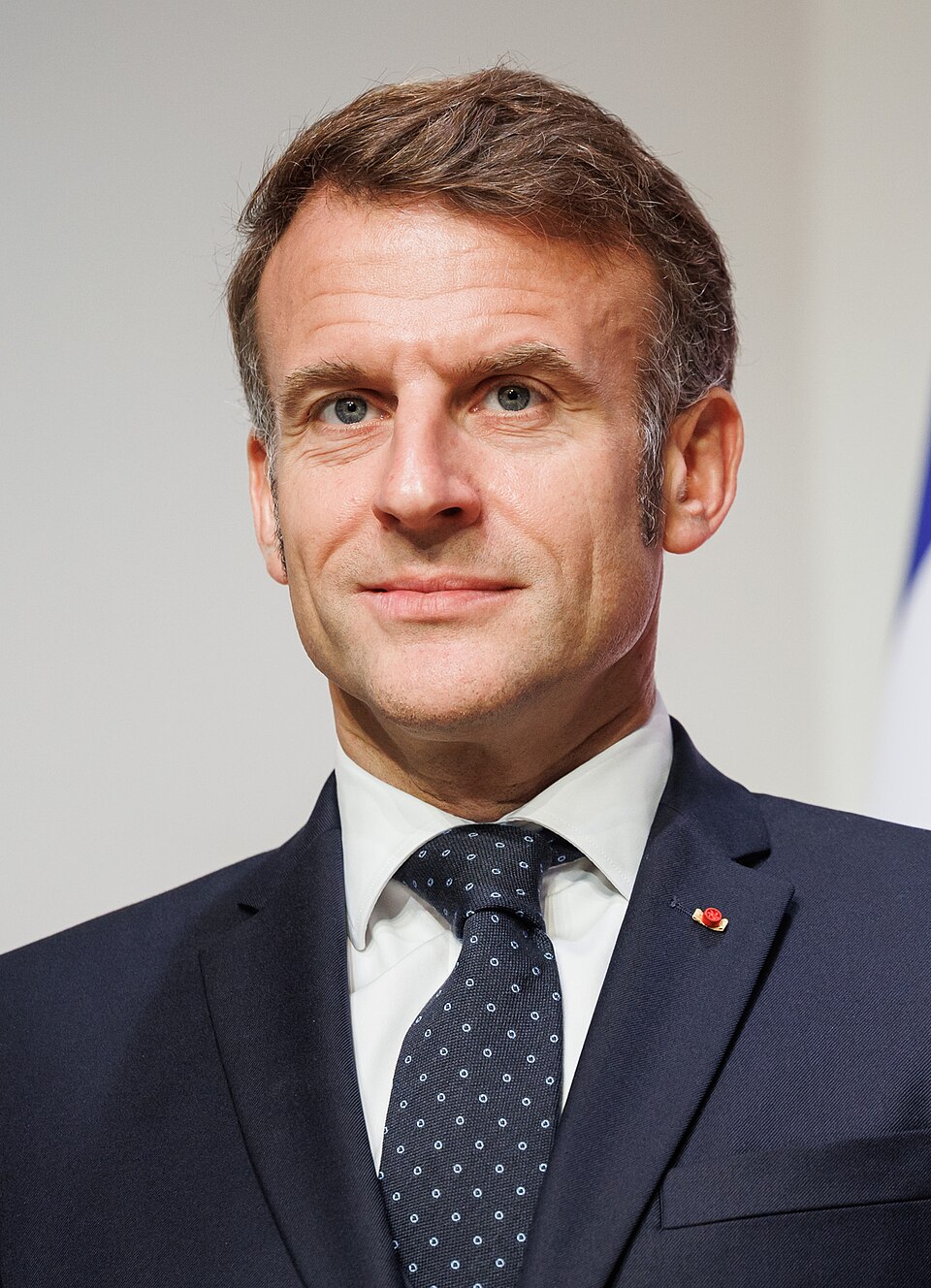
Macron Orders Aircraft Carrier to Mediterranean Amid Mideast Crisis
In a decisive move underscoring France's commitment to regional stability and the protection of its interests, French President Emmanuel Macron has ordered the deployment of the nation's flagship aircraft carrier, the
Charles de Gaulle, to the Mediterranean. This significant military maneuver comes amidst an escalating crisis in the Middle East, signaling a robust and proactive stance from Paris. Macron's address to the nation, broadcast across French television channels, including prominent news outlets like LCI, provided a clear explanation of France's strategic imperatives, emphasizing the volatile situation and the uncertainties that lie ahead. For many watching these critical announcements, news of
Macron LCI became a primary search to follow the developments and expert analysis on the unfolding events.
France's Strategic Deployment: The Charles de Gaulle in Action
The deployment of the
Charles de Gaulle is far from a symbolic gesture. As France's nuclear-powered aircraft carrier and a cornerstone of its power projection capabilities, its presence in the Mediterranean represents a substantial reinforcement of military assets. President Macron detailed that the carrier would be accompanied by its full complement of air assets, including advanced Rafale fighter jets, as well as a frigate escort, forming a formidable naval task force. This move, he stated in his address, is a direct response to the "unstable situation and the uncertainties of the coming days" in the Middle East.
Beyond the carrier group, France has also deployed additional air assets and defense systems to the region over recent hours. Rafale fighter jets, state-of-the-art air-defense systems, and airborne radar systems are now operational, with Macron affirming that these efforts would continue "as much as necessary." This comprehensive defense posture reflects prior discussions held by France's defense council, where the French president had already indicated an intent to significantly raise the nation's defense posture in the Middle East. The goal is multi-faceted: to protect French nationals and military bases, and to offer robust support to regional allies targeted by escalating hostilities. The
Charles de Gaulle, as the only non-US nuclear-powered carrier, serves not just as a military asset but as a potent symbol of French sovereignty and its capacity to act independently on the global stage. Its deployment underscores a strategic doctrine that prioritizes preparedness and assertive engagement in areas critical to France's security and broader European interests.
Protecting French Interests and Allies: Beyond the Carrier Group
The deployment of the
Charles de Gaulle is part of a broader, multi-layered strategy to secure French interests and support allies. President Macron specifically cited Monday's strike on a British air force base in Cyprus as a critical concern. Cyprus, as a member of the European Union and a nation with which France shares a recently signed strategic partnership, demands France's unequivocal support. Consequently, Paris has decided to send additional air-defense assets to the island, alongside the French frigate
Languedoc, which was slated to arrive off the Cypriot coast shortly after the announcement. This reinforces France's commitment not only to its direct assets but also to its European partners' security.
Furthermore, France has already taken significant steps in the United Arab Emirates. Foreign Minister Jean-Noël Barrot previously confirmed the deployment of Rafale fighter jets over the UAE to protect French naval and air bases, which house hundreds of French navy, air force, and army personnel. These Rafale aircraft, stationed at the Al-Dhafra base near Abu Dhabi, have been mobilized to ensure the security of French facilities and have carried out operations to secure the airspace above these bases. A concerning incident saw a hangar at a French base in the UAE hit by a drone, prompting urgent discussions on enhancing defense capabilities against future attacks and ensuring France can adequately protect its vital interests. The comprehensive nature of these deployments, from carrier groups to specialized air-defense systems and fighter jets, highlights a pragmatic and resolute approach to safeguarding personnel and strategic assets in a volatile region. For more details on these extensive security measures, you can read about how
France Boosts Middle East Defense: Macron Details Security Measures.
Macron's Broader Foreign Policy and European Stance
President Macron's decisive actions in the Middle East are consistent with his overarching foreign policy vision, which champions European sovereignty and a robust, independent role for France on the global stage. His recent directives echo his long-standing stance against passive acceptance of dominant powers, a principle he vehemently articulated at the World Economic Forum in Davos. Recalling past diplomatic spats, such as his pointed criticism of then-U.S. President Donald Trump's intentions regarding Greenland, Macron has consistently advocated for Europe to assert its own strategic autonomy. After Trump publicly shared Macron’s private communication, the French president delivered a severe critique, stating unequivocally that Europe would not "passively accept the law of the strongest."
This commitment to European independence and strategic depth forms the philosophical bedrock of France's current military posture. The deployment of the
Charles de Gaulle is not merely a reactive measure but a demonstration of France's capacity and willingness to act unilaterally when necessary, while simultaneously reinforcing European security frameworks. Macron's leadership aims to position France, and by extension Europe, as a credible and influential actor capable of shaping its own destiny and protecting its values in an increasingly multipolar world. His administration continuously seeks to balance national interests with broader European solidarity, forging a path that ensures both security and influence. To delve deeper into Macron's assertive diplomatic history and his vision for Europe, explore
Macron Blasts Trump, Champions European Sovereignty at World Forum.
The Role of Media and Public Communication During Crises
In times of crisis, clear and consistent communication from national leaders is paramount. President Macron's decision to address the nation directly via "pre-recorded speech on French TV" underscores the strategic importance of public communication. These addresses, carried by major French broadcasters such as LCI, serve multiple purposes: to inform the public about critical developments, to explain the rationale behind significant policy decisions, and to reassure citizens about the government's proactive measures. For French citizens seeking immediate updates and analysis, searching for "
Macron LCI" or similar terms often leads them to channels providing real-time coverage and expert commentary on presidential announcements.
French media outlets play a crucial role in disseminating such vital information, offering platforms for government statements, live reporting, and in-depth discussions. During his speeches, Macron not only outlined the military deployments but also provided context regarding the broader geopolitical landscape, ensuring transparency and fostering a sense of national unity in the face of external threats. This direct approach to communication is essential for maintaining public trust and garnering support for potentially controversial or costly military engagements. It ensures that the public understands the gravity of the situation and the necessity of the measures being taken, from the deployment of aircraft carriers to the reinforcement of air defense systems in allied territories.
Conclusion
President Emmanuel Macron's order to dispatch the aircraft carrier
Charles de Gaulle to the Mediterranean represents a firm declaration of France's commitment to protecting its interests, its nationals, and its allies amidst the escalating Middle East crisis. This comprehensive strategy, involving not only a formidable naval presence but also targeted air and defense deployments in the UAE and Cyprus, highlights France's proactive and independent foreign policy. From his direct addresses on French television, often covered extensively by channels like LCI, to his unwavering stance on European sovereignty, Macron continues to steer France towards a path of assertive engagement and strategic autonomy. As the region navigates complex uncertainties, France's decisive actions underscore its crucial role in maintaining stability and safeguarding security on the global stage, solidifying its position as a key player capable of impactful military and diplomatic leadership.